Deadlock Night Shift Open Recap: Sponsors, Viewership, and NA vs EU
Night Shift Open showed how fast Deadlock esports is growing, with major sponsors, strong viewership momentum, and a fresh NA vs EU storyline. Backed by Intel and Walmart, the event proved that weekly Deadlock tournaments are starting to feel bigger, more competitive, and more important to the scene.
MNBrady
6/13/20263 min read
Night Shift Open was not just another weekly Deadlock event. It was one of the clearest signs yet that Deadlock esports is starting to grow beyond a small grassroots scene.
The biggest reason was the sponsor presence. Intel and Walmart backing a $12,000 Deadlock tournament gave Night Shift Open a different level of weight. For a game that is still building its competitive identity, this kind of support from the corporate world matters. It shows that larger brands are at least willing to test the waters around Deadlock esports, even before the game has a fully established official circuit.
This is important because early esports scenes usually grow through consistency first. Weekly events build the players, teams, fans, and storylines. Sponsors help turn that consistency into something that looks more serious from the outside. Night Shift Open is such a boon to the Deadlock E-Sports community because it has access to both.
The event also had enough viewership momentum to feel meaningful. Deadlock Night Shift has become one of the main homes for competitive Deadlock broadcasts, and the channel has been pulling strong numbers for a young scene. Even without official event specific viewership numbers being fully available, the recent audience data around Deadlock Night Shift shows that more and more fans are paying attention and tuning in.
This is so important because viewership is what turns a tournament result into a storyline. A bracket can exist with no audience, but it only becomes esports when people watch, argue, react, and come back the next week. Night Shift Open had that feeling. It felt like a real moment in the developing scene that everyone can share together.
The other major story on Night Shift was regional pride.
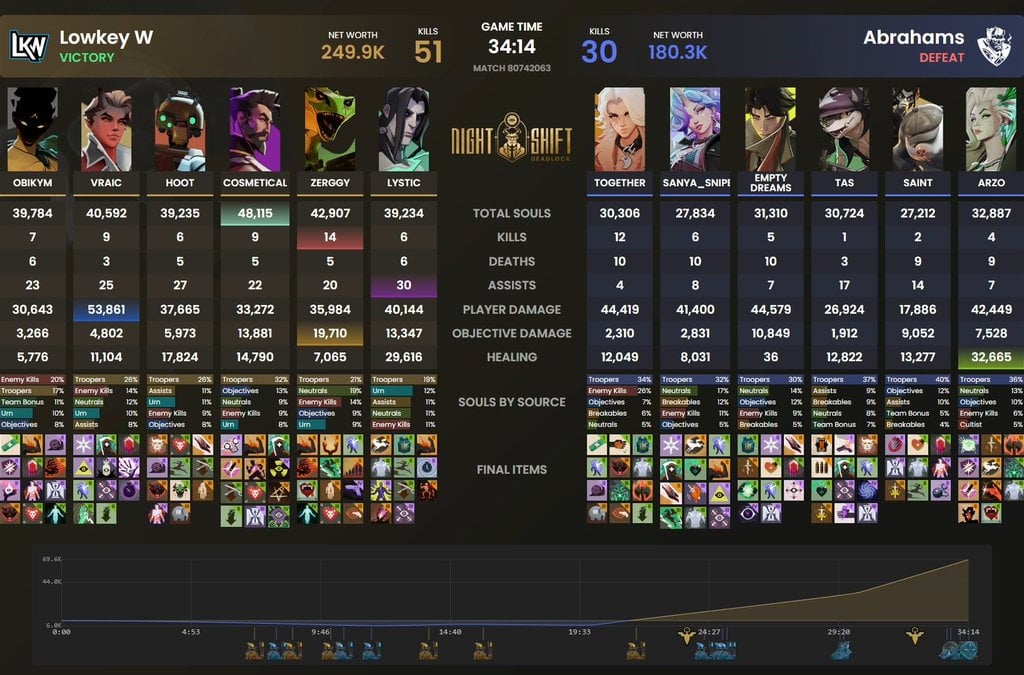
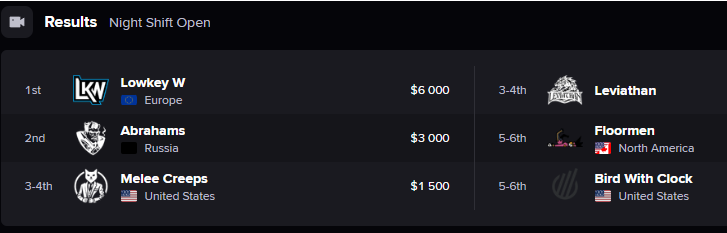
Night Shift Open was hosted as a North American event, but it quickly became another chapter in the NA versus EU conversation. Lowkey W, a European team, won the event. Abrahams, a Russian team, finished second. Melee Creeps, one of the strongest North American names, only landed in the top four.
That result makes the regional debate hard to ignore. NA had the server advantage and the home event setup, but the final still ended up being won by a European roster over a CIS roster with a large lack of NA representation. For Deadlock fans, that gives the scene exactly what it needs right now: tension between regions.
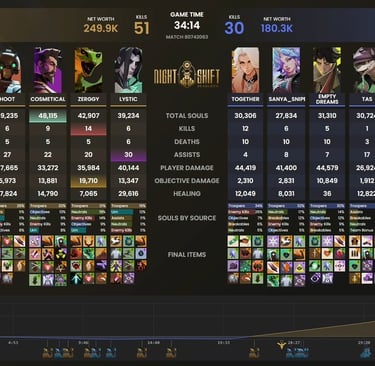
This very young esport needs regional storylines. League has them. Counter Strike has them. Valorant has them. Deadlock is starting to build its own version, and Night Shift Open gave fans a clean example of how fun regional differences can be. Is Europe ahead right now? Can NA close the gap? Is CIS quietly one of the strongest regions in the game? Those are the questions that keep people watching after the tournament ends and tuning into future multi region tournaments.
That is what made Night Shift Open feel bigger than a normal weekly.
The prize pool gave it stakes. The sponsors gave it legitimacy. The broadcast numbers showed there is an audience forming. The results gave fans a regional argument to carry forward. Most importantly, the tournament made Deadlock esports feel like something that is worth to watch.
Deadlock still has a long way to go. The scene needs better discoverability, cleaner schedules, more consistent stats, and easier ways for casual fans to follow teams. But Night Shift Open showed that the foundation is already there.
This was not just a tournament that Lowkey W won.
It was a sign that Deadlock esports is starting to look real.
Check Out Our Deadlock Memes!
Contact
Questions? Reach out anytime!
brady@deadlockdaily.com
© 2026. All rights reserved.